
The afternoon of Sept. 10, 2025, I was sitting on my couch in Bushwick, having just filed a story for The American Independent, scrolling on my phone.
My thoughts drifted to the journalism master’s program in London that I’d applied to months prior, been accepted to, but ultimately decided to pass on. Not out of regret — just curiosity at the path not taken.
I clicked an email I’d received for the program, which I had yet to officially decline admission to but already seemed like something from a parallel reality. I perused some of the other names on the email. Strangers I’d never meet. Friends I’d never know.
In the surreal days after the 2024 election, I was overwhelmed with a sinking feeling that I couldn’t stay in the United States for four years of madness that were sure to be even worse than Donald Trump’s first term — which, after all, literally ended in an attempted coup d’etat.
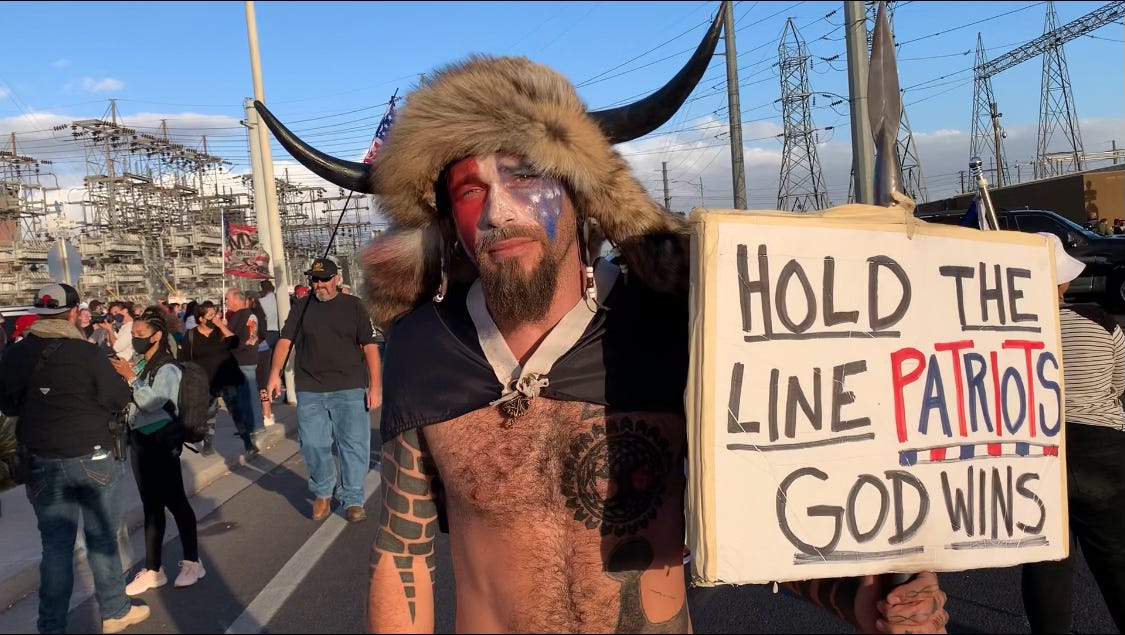
I’d interviewed many of Trump’s most extremist supporters, including one who would go on to become the face of the Jan. 6 Capitol insurrection. I knew what these people believed. I knew what they were capable of. I knew the immense danger to Americans, to non-Americans, to the world, if their movement was ever allowed access to power again. So, shortly after Trump’s second inauguration, I started to search for plausible ways to get myself out of the country. Master’s programs in countries with English-language media seemed the easiest route. Canada was too close, Australia was too far, but the United Kingdom — for all its problems — seemed just right.
The metaphor of the frog in a pot of boiling water has always been an apt one, though. Nine months into the new administration, even I had begun to tell myself that I could simply wait out the chaos. And, driving back to California from New York City to leave some of my belongings with my family before my potential departure for London, witnessing Iowa cornfields and Wyoming buttes and Nevada deserts, I was reminded of my immense love for the only country I’d ever known.
It’s a place that’s never really lived up to its values, sure. But for most of my life, I’ve had faith in it. Faith that it could learn from its mistakes. Faith that it could grow. Faith that it’s a place anyone from anywhere on this planet could come to and belong. And it’s always looked damn beautiful while it’s at it.
Taking in the grandeur of America from behind the wheel of a compact sedan somewhere on Interstate 80, I decided to stay.
I was confident in that decision as I read through that email from a lecturer at City St. George’s, University of London, pondering the alternate dimension I had steered myself away from.
I had, after all, achieved much of what I’d set out to. Perhaps I hadn’t yet worked for a publication of the caliber that I craved. But I was born to two working-class 19-year-olds in suburban California and I’d managed to get myself a job in media, an apartment in New York City and a brand new Hyundai Elantra, goddamnit. I had my version of the American dream and I was loath to give it up. So I read the names on the email and felt perhaps the slightest bit of wistfulness, but outweighed by my pride in the stability my typing fingers had achieved for me up until then — as well as my fear of the unknown.
It was at that moment that a push notification popped onto the top of my iPhone screen.
Charlie Kirk shot at Utah rally.
There are shootings every day in America. In large cities. In country towns. In well-to-do suburbs. In impoverished enclaves.
I wish I could say I had the same reaction to all of them that I did to reading those words on my phone screen. But even before I knew Kirk was dead, I knew the reaction to an act of violence against a prominent conservative ideologue (a word I use generously here) would be just the impetus the Trump movement needed for a crackdown on political opposition.
I would be proven right within hours after it became clear that the shooting had ended Kirk’s life.
Watching Kirk’s online news channel, I saw the narrative forming in real-time.
“The Democrat party is rotten from top to bottom,” Matt Boyle, the Washington bureau chief for Breitbart News told Steve Bannon on Real America’s Voice. “They have been corrupted by the radical left. They’ve been taken over. They’ve been subsumed. Maybe one day we’ll get to a place where we have two parties again that are reasonable, but we don’t have a reasonable Democrat party anymore. Democrats are not reasonable. The fact is, is that they have created this culture.”
It’s pretty easy to imagine what follows from this sort of rhetoric. If America doesn’t have a reasonable “Democrat party” anymore, then why bother competing with it in the market of ideas? Why not simply use the powers of the state — the ones that will be completely at Republicans’ disposal until at least Jan. 20, 2029 — to crush those they disagree with?
Kirk’s body was hardly yet cold before we saw this mindset starting to take hold.
White House Deputy Chief of Staff Stephen Miller began referring to a “vast domestic terror network” funded by liberals, and pledged to use the departments of Justice and Homeland Security to destroy this imaginary bogeyman.
Trump became emboldened to pressure prosecutors to harass his political enemies with not just investigations, but actual criminal charges.
While FCC Chair Brendan Carr’s ostensible attempt to pressure Disney to fire late night host Jimmy Kimmel backfired and became a victory for free speech, it raises questions, for me at least, about how far the Trump administration may try to go if it ever feels again that it has the wind at its back.
After many sleepless nights, I finally came to a conclusion that I had desperately tried to elude. I knew I didn’t want to live in a country where the president can order someone prosecuted and it happens. I didn’t want to live in a place where I genuinely worried whether my employer could provoke the White House’s wrath if it had the wrong political connections. And honestly, I’d known this for months, ever since I saw the first thinly-veiled Nazi meme on the Department of Homeland Security’s Twitter account. I’m the most annoyingly patriotic person my Bushwick friends know. I come from generations of military service and, had I not become a journalist, would likely have taken that path myself. But in autumn 2025, I found the United States was no longer a place I recognized, nor a place I wanted to continue building my life.
So I made the requisite emails to keep my place in the London master’s program. I spent my 28th birthday not celebrating, but throwing my belongings into a storage unit in Queens. I sold my car. I made arrangements for a friend to watch my cat until I could return for him. And in my last act before throwing my luggage in a cab to get to JFK, I accidentally locked my keys in my apartment — a sign I couldn’t go home again if I ever needed one.
I still ask myself whether I made the right choice, of course. Sometimes, like during Democrats’ resounding sweep of the elections that took place last month, I wonder whether I wouldn’t rather be in the fight more directly. But later, reading news of politicized prosecutions, of more families torn apart, of more conspiracy theories lent credibility by actors at the very highest levels of the American government, I wonder whether I would have really made it four more years in the middle of it all with my sanity intact.
And beyond even my sanity, I wonder whether it was a safe bet that my very livelihood would make it through the second Trump administration unscathed.
The day of Charlie Kirk’s assassination, I was working for a Democratic-affiliated nonprofit news organization.
On Sept. 27, the day I landed in London, Trump signed a national security memorandum, NSPM-7, classifying views such as “extremism on race,” “extremism on migration,” and “extremism on gender” as “indicia” of left-wing violence.
Perhaps the only saving grace here is that the Trump administration, and its associated law enforcement apparatus, is filled with incompetent sycophants who refuse to make public appearances unless an appropriate aesthetic jacket can be found. If I were picking an enemy I knew I could outsmart, Kash Patel would certainly be high on the list.
Indeed, my former employer still operates. I have yet to see any liberal group face threats from the Trump administration that couldn’t be halted with some spine and resolve.
But it’s also December 2025. We have just over three more years to go. A lot can happen in three years.
So was my decision to come to London an overreaction, the crashout of a lifetime? Or will it come to be my lifeline, a means for me to report critically on the American government without fear of my employer being shut down? (Or at least with slightly less fear — Trump says he is suing the BBC after all).
I don’t know the answer, of course. But here’s what I do know: The night I landed in Britain, I slept through the night for the first time in months.